The Cute Animal That Broke My Heart And Almost Killed Me in the Process
- Quick Tags: Jerboa, exotic pet care, fragile small pets, nocturnal exotic animals
- Editor: Chloe Jones
- Updated: Apr,03,2026
- Views: 234.6k


My friend Jax’s Instagram feed used to be full of gym selfies and coffee runs—until he stumbled on a reel of a jerboa. The tiny creature, with its impossibly long hind legs and fluffy tail, hopped like a mini kangaroo, and Jax was obsessed instantly. “Desert vibe + cute factor = perfect pet,” he texted me before dropping $300 on a jerboa he named Kanga, plus a “starter kit” he found online. Two weeks later, he was in tears, texting me that Kanga had stopped eating and was hiding in the corner of its cage. “I thought I was getting an Instagram-worthy sidekick,” he choked up. “Turns out, I got a fragile wild animal that I had no idea how to keep alive.” That’s the jerboa truth social media refuses to show: those “mini kangaroo” reels are just fleeting moments of cuteness, hiding the brutal reality that these animals are nearly impossible for casual owners to care for. Impulse buys almost always end in tragedy—and Kanga’s story is far from unique.
Let’s start with their non-negotiable habitat needs: Jerboas are desert dwellers, native to the arid regions of Africa and Asia, and they require an environment that mimics their wild home down to the smallest detail. Exotic animal veterinarians and the Association of Exotic Mammal Veterinarians (AEMV) stress they need at least 45 centimeters (18 inches) of fine, dry desert sand to burrow—anything less, and they’ll develop severe anxiety. Jax’s “starter kit” came with a thin layer of generic bedding, which Kanga refused to use, instead pacing frantically along the cage floor. “I had to buy 50 pounds of special desert sand and a giant glass tank to hold it—cost me another $150,” he says. Temperature and humidity are even trickier: Jerboas thrive at 25-30°C (77-86°F) with humidity below 30%. If it’s too cold or damp, they develop respiratory infections—a death sentence for most captive jerboas. Jax had to buy a heat lamp and a hygrometer to monitor levels, and he still worried constantly when the AC kicked on at night.
Then there’s the diet: Jerboas are obligate insectivores, meaning they survive on a diet of live insects—crickets, mealworms, and waxworms—plus occasional seeds. They won’t touch dried food or pellets, and a poor diet leads to malnutrition fast. Jax tried feeding Kanga the dried “exotic pet food” from the starter kit, but she ignored it, growing thinner by the day. “I had to start buying live crickets weekly, and I hate bugs—every time I open the container, I panic,” he admits. Even then, balancing nutrition is hard: too many mealworms lead to obesity, too few crickets cause protein deficiency. A 2024 survey by the Exotic Pet Welfare Coalition found that 75% of jerboa owners struggle to maintain a proper diet, and 60% of captive jerboas die within the first three months due to malnutrition or habitat-related stress.
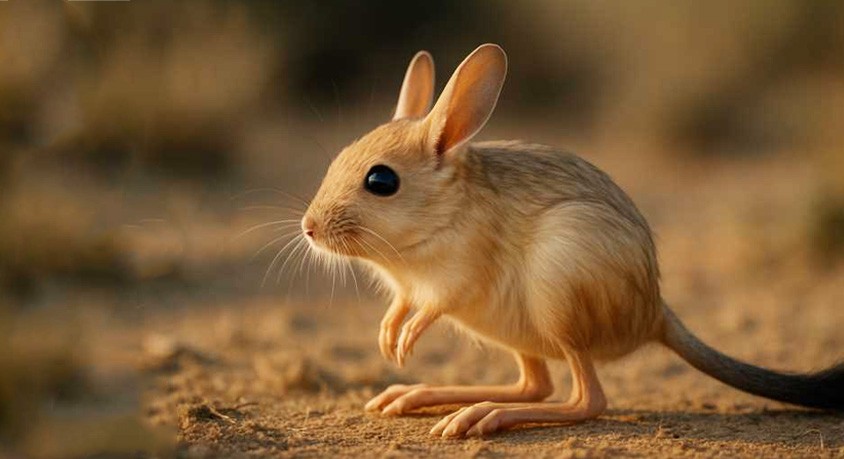
Worst of all? Jerboas are wild, skittish, and almost impossible to interact with. They’re nocturnal, so Jax—who works a 9-to-5—rarely saw Kanga awake; she’d hide in her burrow all day and only emerge to hop around for a few hours after midnight. When he tried to gently pick her up, she’d dart away, squeaking in fear, and once she bit his finger in panic. “Social media makes it look like they’ll hop onto your hand for photos, but that’s just stressed animals in controlled videos,” Jax says. The AEMV confirms jerboas are solitary, territorial, and have no desire for human interaction—they’re strictly observation-only pets, and even that requires minimal disturbance. Jax’s dream of filming Kanga hopping around his room never came true; instead, he spent most nights worrying if she was still alive.
Eventually, Jax made the hardest decision: he surrendered Kanga to a rescue that specializes in exotic desert animals. “The vet there said she was malnourished and dehydrated, and if I’d waited another day, she wouldn’t have made it,” he says, his voice still shaky. “I felt like a monster for buying her on a whim, without doing any research.” The rescue told him that 80% of jerboas sold online end up surrendered or dead within six months—casual owners simply can’t meet their hyper-specific needs.
If you’re tempted by jerboa reels, stop. These aren’t pets—they’re wild animals with needs that most people can’t fulfill, even with the best intentions. Social media has turned them into a trendy accessory, but the reality is far from cute: stressed, malnourished creatures hiding in cages, and heartbroken owners who didn’t know what they were getting into. Jax’s Instagram is now full of posts educating people about exotic pet welfare, with captions like “Some animals aren’t meant to be kept indoors—no matter how cute they are.” Don’t make his mistake: Admire jerboas from afar, in their natural desert homes. The “mini kangaroo” charm isn’t worth the cost of a fragile life.